Cardiac Detour
February 11, 2026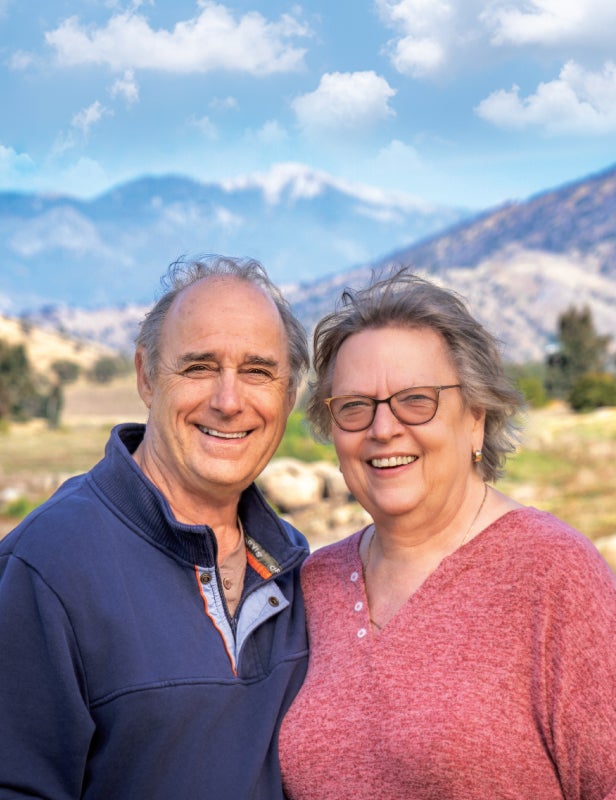
Gary and Naomi Faucett never imagined their eight‑month RV adventure across Canada and the eastern United States would end the way it did. Their story is a testament to vigilance, expert medical care, and the resilience of a devoted couple.
Warning Signs
During their trip of a lifetime, Gary noticed feeling some chest palpitations and fatigue for the first time. The former avid cyclist started getting so exhausted, he gave up biking, figuring it was just a part of aging. Naomi started to notice a difference in Gary too — he was shuffling his feet, speaking with a weaker voice, and sweating profusely after just 15 minutes of a simple activity
like watering plants in the yard.
When they returned home, Gary visited a cardiologist and while his EKG looked normal, further testing was ordered. Meanwhile, Naomi — who had been quietly experiencing jaw pain during the trip — decided it was time for her own checkup.
Code Blue
Naomi’s EKG results from her checkup were immediately concerning. Combined with her jaw pain, her doctor said she must go to the hospital for an angiogram, a special X-ray test to look at your arteries and veins, that week. Gary, waiting in the car, had no idea about her symptoms until he was called inside.
On the morning of her angiogram, Naomi’s jaw pain returned intensely. Gary rushed her to the emergency department, where she was transferred to surgery for an emergency angioplasty. Minutes later when the intercom announced, “Code Blue” (a critical emergency alert) Gary, a retired paramedic, knew instantly, it was Naomi. Naomi had gone into cardiac arrest during the angioplasty and required four cardioversions (controlled electrical shocks to reset an irregular or rapid heart rhythm) to revive her. When she woke up, she was in the ICU (intensive care unit).
“I was shocked at how fast everything had happened,” says Naomi. “One of my nurses told me I was ‘one tough cookie’ who had ‘fought for everything’ while the team worked to save my life.” Naomi still needed a bypass surgery, which was scheduled for the upcoming Monday.
Gary’s Turn
The next day, as Naomi recovered in the ICU, Gary continued a series of tests used to check the heart’s electrical activity, structure, and blood flow, called a cardiac workup. He completed a treadmill stress test — and failed it, so he was scheduled for an angiogram the next day. When Gary woke up, he received serious news from his care team —he had severe, four‑vessel coronary artery disease requiring a quadruple bypass. Gary recalls not grasping the seriousness of his condition.
“I told them I would just head home and come back Monday for the surgery, but cardiothoracic surgeon Shelly Bansal, MD, told him, “Gary, you don’t understand. We are checking you in immediately. We need to keep a close eye on you.”
The next day, intense chest pain gripped Gary.
“I was curled in a fetal position, clutching my chest in horrible pain. I was certain I was dying,” he remembers.
The team rushed him to emergency surgery. He woke with four new bypass grafts while his wife was recovering on a different floor.
Two Hearts, One Hospital
The surreal reality of both spouses hospitalized for major heart surgery brought unexpected challenges. Naomi’s greatest distress was being unable to sit at Gary’s bedside — something she had always done. Dr. Bansal arranged for the Faucett’s son to video call from Gary’s room so Naomi could pray with him before surgery.
The staff worked to keep them connected. When both were stable, they were placed side by side, pillows together — two recovering patients who had spent decades as each other’s caregivers.
Exceptional Care
Gary and Naomi have a profound gratitude for the Kaweah Health cardiac team that cared for them.
“They got to know us as people, not just as patients,” Naomi says. “They were very encouraging and told us we would get better and be able to do things again.”
Gary recalls the compassion they showed throughout recovery, “If you rang the bell, they were right there. And I’ll just never forget that. I’ll never forget their names, ever. They’ll be a part of our lives. I love those ladies and men.”
Road to Recovery
Going home proved humbling. Simple tasks suddenly required assistance. Their sons, daughters‑in‑law, and a granddaughter flew in to help. When family left, they hired Kaweah Health Home Care
for support. A home health team visited several times weekly, teaching them how to move safely and handle daily tasks without straining their incisions.
A 12-week cardiac rehab program at Kaweah Health Cardiac Rehabilitation Clinic became Gary and Naomi’s bridge from surgical patients to active individuals. The clinic staff knew each patient’s medical history — including Gary’s cardiac history and Naomi’s preexisting mobility challenges — and tailored exercises accordingly, pushing them without ignoring real limitations.
Today, Gary and Naomi offer straightforward advice: reach out and get help, don’t ignore symptoms, and if cardiac rehab is recommended, commit to it.
“There’s life after heart surgery,” Naomi emphasizes.
They are already planning to get back into their trailer for more trips next year — two hearts, both repaired, moving forward together.